
Vitamin C and Collagen Formation for Endurance Athletes
Runners, cyclists and triathletes place regular demands on their bodies. Training involves repeated movement, impact, force and recovery — which makes the everyday nutritional foundations especially important.
Vitamin C is one of the nutrients involved in this foundation. It contributes to normal collagen formation for the normal function of cartilage, bones, skin, gums, teeth and blood vessels.
That does not make vitamin C an injury treatment or a shortcut around sensible training progression. It is simply an essential nutrient with a recognised role in normal collagen formation, as part of a varied diet and healthy lifestyle.
What Is Collagen?
Collagen is a structural protein found throughout the body. It is present in tissues including skin, cartilage, bones, blood vessels, ligaments and tendons.
For endurance athletes, it is easy to focus solely on carbohydrates, protein shakes and race-day fuelling. Those matter, but long-term training also relies on consistent everyday nutrition, appropriate strength work, rest and gradual progression.
Vitamin C contributes to normal collagen formation — one reason it is a valuable nutrient to include within an athlete’s overall diet.
Vitamin C and Normal Collagen Formation
Vitamin C contributes to normal collagen formation for the normal function of:
- Cartilage
- Bones
- Skin
- Blood vessels
- Gums and teeth
These are normal nutritional functions. They are relevant to everyone, including people who train regularly and want to maintain a consistent approach to health and nutrition.
IMPORTANT CONTEXT
Vitamin C supports normal collagen formation, but it does not prevent injuries, heal tendon problems or replace medical care. If you have persistent pain, swelling, loss of function or a suspected injury, seek advice from an appropriate healthcare professional.
Why This Matters for Runners
Running is repetitive. Whether you are preparing for a 10K, marathon, trail event or ultra, your training should be built on gradual progression, suitable footwear, strength work, recovery and enough food to support the work you are doing.
Vitamin C belongs in the nutritional basics. It contributes to normal collagen formation, normal immune-system function, protection of cells from oxidative stress and reduction of tiredness and fatigue.
The practical message is simple: do not overlook everyday micronutrient intake while you focus on mileage, pace and race goals.
Why This Matters for Cyclists
Cycling is lower impact than running, but long rides, climbing, high training volume and time in one position can still create significant physical demands.
For cyclists, a food-first diet remains the priority. Aim for adequate energy intake, carbohydrate around demanding rides, sufficient protein, fruit and vegetables, hydration and appropriate recovery.
Vitamin C can form part of that wider daily routine through food sources and, where appropriate, a supplement.
Why This Matters for Triathletes
Triathlon combines three disciplines with a high frequency of training. This can make it tempting to look for a single product that solves every problem.
There is no such product. The best approach is to build a strong foundation: consistent meals, practical fuelling, sleep, rest, strength work and sensible training progression.
Vitamin C contributes to normal collagen formation and normal immune function, making it one useful nutrient within that larger picture.
Food Sources of Vitamin C
A varied diet should always be the main source of vitamins and minerals. Foods that provide vitamin C include:
- Oranges, satsumas and grapefruit
- Kiwi fruit
- Strawberries and berries
- Peppers
- Broccoli
- Brussels sprouts
- Tomatoes
- Potatoes
- Leafy green vegetables
Including a variety of fruit and vegetables across the week helps support overall nutritional intake — not just vitamin C.
Where Does Endurance C Fit In?
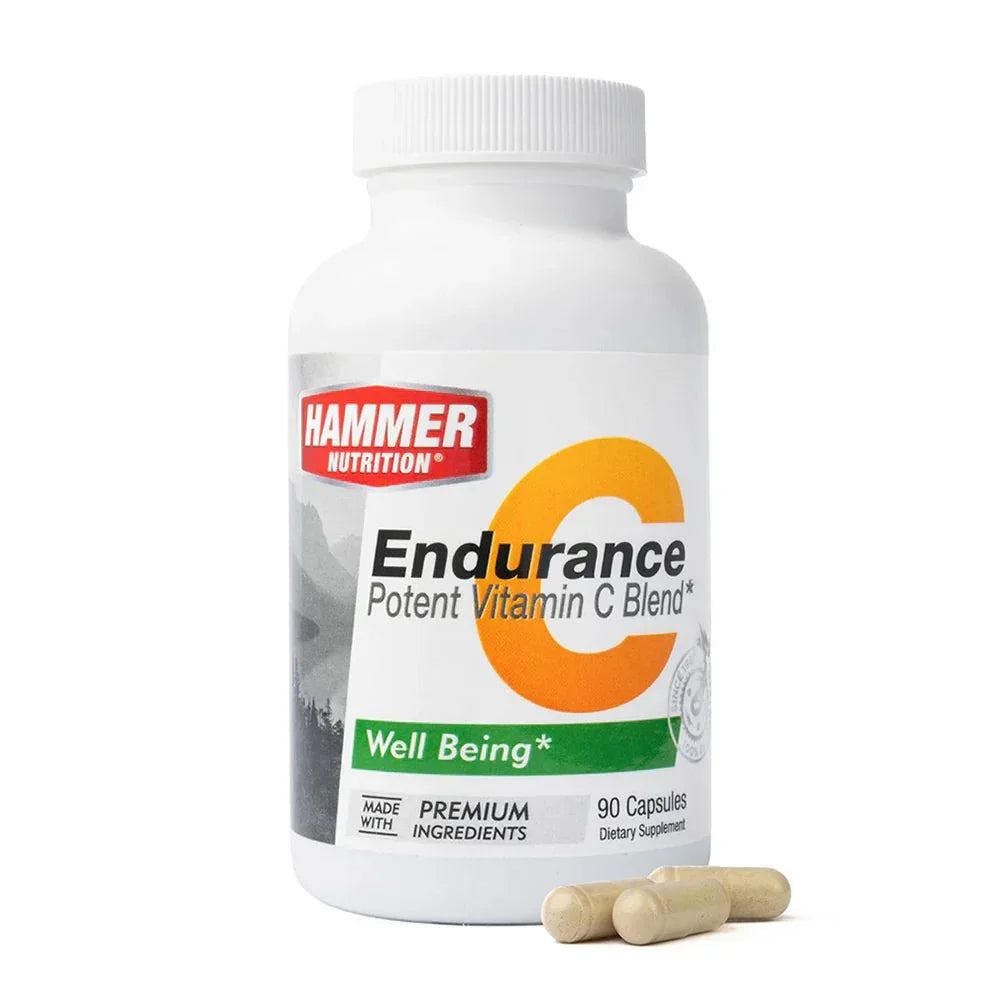
Endurance C is a premium vitamin C formula for athletes and active adults who want more than a basic single-source tablet.
It combines two forms of vitamin C with complementary plant compounds:
ENDURANCE C FORMULA HIGHLIGHTS
Buffered calcium ascorbate
Fat-soluble ascorbyl palmitate
Citrus bioflavonoids
Hesperidin
Quercetin
Rose hips
Endurance C is intended to complement a varied diet, not replace it. It can be used as part of a consistent daily nutrition routine during regular training, busy periods and winter months.
Read Buffered Vitamin C vs Ascorbic Acid to learn more about the two vitamin C forms used in Endurance C.
Vitamin C and Collagen Supplements
Some athletes choose to use a collagen supplement as part of their wider nutrition routine. Vitamin C can be a natural consideration because of its recognised role in normal collagen formation.
However, no supplement replaces a varied diet, appropriate loading, rehabilitation advice or professional assessment when needed.
A Practical Daily Routine
Nutrition works best when it is simple enough to repeat. A practical daily routine might include:
- Eat a variety of fruit and vegetables every day.
- Include carbohydrate and protein around demanding training as appropriate.
- Keep hydration consistent.
- Prioritise sleep and recovery.
- Take Endurance C with meals, following the product label.
- Use training progression that matches your current fitness and event goals.
Endurance C is taken as three capsules per day, preferably in divided doses. On training days, the label suggests one capsule before training and two capsules after training.
Frequently Asked Questions
Does vitamin C help with collagen formation?
Yes. Vitamin C contributes to normal collagen formation for the normal function of cartilage, bones, skin, gums, teeth and blood vessels.
Can vitamin C treat tendon injuries?
No. Vitamin C should not be presented as a treatment for tendon injuries or other medical conditions. Seek advice from an appropriate healthcare professional for persistent pain, swelling or loss of function.
Can I take Endurance C with a collagen supplement?
Endurance C and collagen can form part of the same wider nutrition routine. Follow each product label and consider your total intake from all foods and supplements.
Is vitamin C important for runners and cyclists?
Vitamin C has recognised roles in normal immune function, protection of cells from oxidative stress, reduction of tiredness and fatigue, and normal collagen formation. These functions are relevant to anyone maintaining a consistent training routine.