
Vitamin C for Athletes: Benefits for Runners, Cyclists & Triathletes
Endurance athletes rightly focus on carbohydrate, hydration, protein and recovery. But a consistent training routine also depends on getting the nutritional basics right — including essential vitamins and minerals.
Vitamin C is one of those foundations. It contributes to normal immune-system function, the protection of cells from oxidative stress, the reduction of tiredness and fatigue, and normal collagen formation for the normal function of cartilage, bones, skin and blood vessels.
For runners, cyclists, triathletes and active adults, this makes vitamin C a relevant part of a varied diet and sensible year-round nutrition routine.
What Does Vitamin C Do?
Vitamin C has several recognised roles in the body. It contributes to:
- Normal function of the immune system
- Protection of cells from oxidative stress
- Reduction of tiredness and fatigue
- Normal collagen formation for the normal function of cartilage, bones, skin, gums, teeth and blood vessels
- Normal energy-yielding metabolism
- Normal functioning of the nervous system
- Increased iron absorption
These are everyday nutritional functions, not a substitute for a balanced diet, sensible training load, sleep or recovery. But they help explain why vitamin C remains important for people who train consistently.
Vitamin C and Normal Immune Function
Vitamin C contributes to the normal function of the immune system. This is especially relevant during busy training periods, travel, colder weather and the UK winter months, when routines can become less consistent.
No supplement should be presented as a way to prevent or treat illness. A better approach is to treat vitamin C as one part of the wider foundations that support normal immune function:
- A varied, balanced diet
- Enough energy to support your training
- Regular fruit and vegetables
- Good hydration
- Consistent sleep
- Appropriate recovery and rest days
- Sensible training progression
Read our Winter Immune Support guide for endurance athletes for the bigger picture.
Vitamin C and Collagen Formation
Vitamin C contributes to normal collagen formation for the normal function of cartilage, bones, skin and blood vessels.
Collagen is a structural protein found throughout the body. For athletes who run, ride, swim, lift and train regularly, maintaining adequate vitamin C intake is one part of supporting normal collagen formation within a complete nutrition plan.
This does not mean vitamin C is a treatment for injuries or a replacement for appropriate medical advice, rehabilitation or training management. It is simply one of the nutrients involved in normal collagen formation.
For athletes using a collagen product, Endurance C can be a natural companion within a wider daily nutrition routine. Explore Hammer Collagen here.
Vitamin C and Oxidative Stress
Vitamin C contributes to the protection of cells from oxidative stress. This is one reason it is often included in athlete-focused nutritional support products.
Endurance training is demanding. Long runs, interval sessions, races, training camps and high-volume cycling blocks all require athletes to pay attention to the quality and consistency of their overall diet.
Food should always come first. Fruit and vegetables are valuable sources of vitamin C and other nutrients, while a supplement can provide a convenient way to maintain a consistent intake alongside a varied diet.
What Makes Endurance C Different?
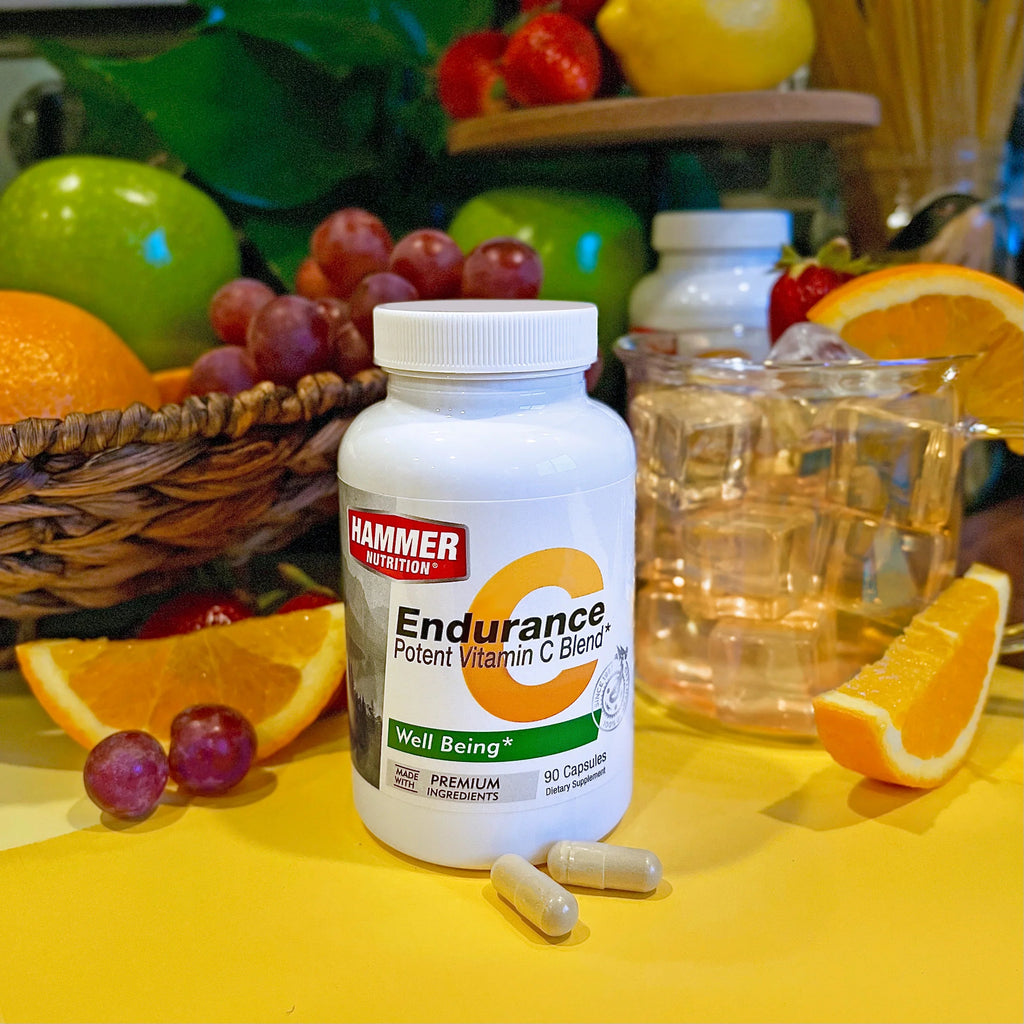
Endurance C is not designed as a basic single-source vitamin C tablet. It combines two forms of vitamin C with complementary plant compounds.
ENDURANCE C FORMULA HIGHLIGHTS
Calcium ascorbate — a buffered form of vitamin C
Ascorbyl palmitate — a fat-soluble form of vitamin C
Citrus bioflavonoids
Hesperidin
Quercetin
Rose hips
This makes Endurance C a broader formula for athletes who want more than a basic commodity vitamin C supplement.
Vitamin C for Runners
Runners often balance training with work, family life, early starts and changing weather conditions. A consistent food-first nutrition routine is especially important during marathon preparation, trail-running blocks and winter training.
Vitamin C contributes to normal immune function, normal collagen formation and the reduction of tiredness and fatigue — all relevant nutritional roles for athletes who train regularly.
Build the basics first: eat a varied diet, fuel your runs appropriately, prioritise sleep and use supplements only to complement those foundations.
Vitamin C for Cyclists
Long rides, back-to-back training days and early-season base work can make day-to-day nutrition easy to overlook. Cyclists should focus on enough energy, carbohydrate, protein, fluids and a wide range of foods across the week.
Endurance C offers a convenient daily vitamin C formula for cyclists who want to support their nutritional routine with more than a basic tablet.
For long rides and races, remember that vitamin C is not a replacement for your on-bike fuelling plan. Use your chosen carbohydrate fuel, hydration and electrolyte strategy to match the duration and demands of the ride.
Vitamin C for Triathletes
Triathlon training can involve a high weekly frequency of sessions across swimming, cycling, running and strength work. This makes a repeatable everyday nutrition routine valuable.
Rather than looking for one “magic” supplement, focus on the essentials: adequate food, recovery, sleep, hydration and consistent micronutrient intake. Vitamin C can be part of that wider approach.
Vitamin C During Winter Training
Winter is when many endurance athletes build the base that supports spring and summer racing. It can also bring shorter daylight hours, indoor training, travel, cold weather and disrupted routines.
Endurance C and Enduro D provide different nutrients with recognised roles in normal immune-system function. They can sit alongside one another as part of a sensible winter nutrition routine.
For broader daily micronutrient coverage, consider Premium Insurance Caps.
How to Use Endurance C
Follow the product label. Endurance C is taken as three capsules per day, preferably in divided doses.
A simple routine is to take capsules with meals at regular times that suit your day. On training days, the label suggests one capsule before training and two capsules after training.
Consistency matters more than finding a “perfect” time. Read our guide to the best time to take vitamin C for practical daily-use advice.
Frequently Asked Questions
Do athletes need more vitamin C than everyone else?
Vitamin C requirements depend on the individual and their overall diet. Athletes should focus on maintaining a varied diet that provides adequate energy and micronutrients for their training demands.
Can vitamin C prevent colds or illness?
No supplement should be relied on to prevent or treat illness. Vitamin C contributes to normal immune-system function, but good nutrition, sleep, recovery and sensible training remain essential.
Can I take Endurance C with Enduro D?
Endurance C and Enduro D provide different nutrients and can form part of the same daily nutrition routine. Follow each product’s label directions and consider your total intake from all supplements.
Is Endurance C just ordinary vitamin C?
No. Endurance C combines buffered calcium ascorbate and fat-soluble ascorbyl palmitate with citrus bioflavonoids, hesperidin, quercetin and rose hips.
Can I take vitamin C with food?
Yes. Taking Endurance C with meals is a simple way to build a consistent routine. Follow the product label for serving guidance.