
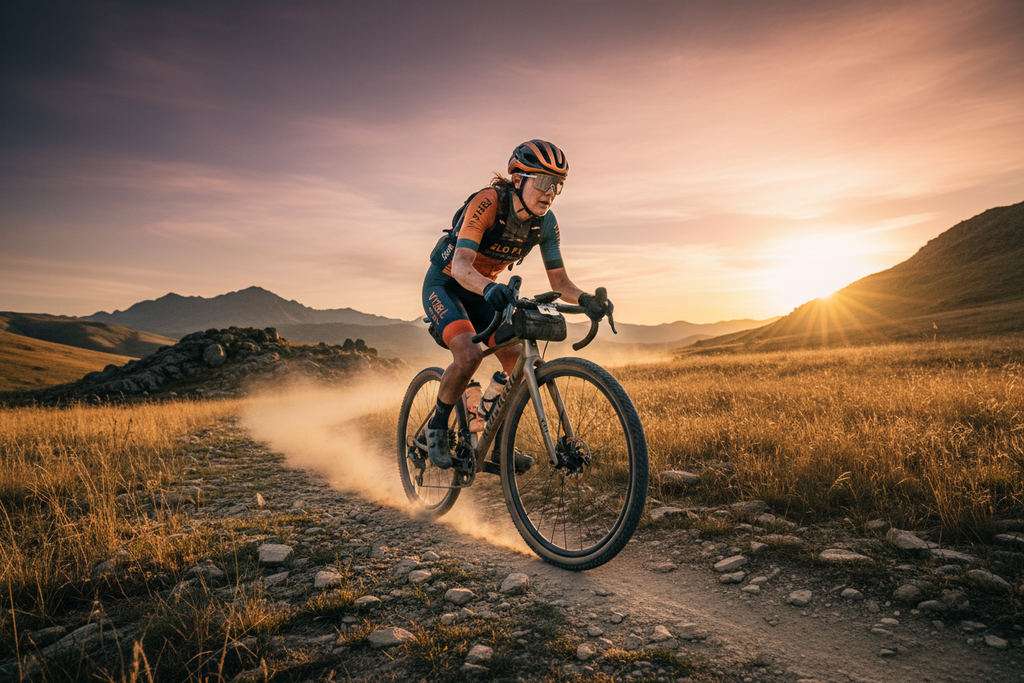
Gravel Race Nutrition & Hydration Plan | Hammer UK
Gravel Race Nutrition & Hydration Plan
Gravel racing creates a different fuelling challenge from ordinary road cycling. Long hours in the saddle, rough terrain, changing intensity, fewer feed stations and limited opportunities to eat or refill bottles mean your nutrition needs to be planned before you reach the start line.
The goal is not to consume as much carbohydrate as possible. It is to take in enough fuel, fluid and electrolytes to maintain a sustainable effort without overwhelming your digestive system.
This guide explains how to build a practical gravel race nutrition plan using duration, conditions and access to aid stations rather than relying on a one-size-fits-all target.
Quick Gravel Race Fuelling Plan
| Race duration | Main fuel | Hydration | Electrolytes |
|---|---|---|---|
| Under 2 hours | HEED and/or Hammer Gel | Water to thirst | Endurolytes as required |
| 2–3 hours | HEED + Hammer Gel | Separate water bottle where possible | Endurolytes |
| 3–6 hours | Perpetuem as primary fuel, with Hammer Gel for variety | Plain water separately | Endurolytes or Endurolytes Extreme |
| 6+ hours | Perpetuem + selected Gel, Perpetuem Solids or Hammer Bar for variety | Plan water refills carefully | Endurolytes or Endurolytes Extreme |
Your exact requirements will depend on body size, intensity, temperature, sweat rate and what you have successfully tested in training.
Why Gravel Racing Requires a Different Nutrition Strategy
A road sportive may provide regular feed stations and predictable sections where eating and drinking are easy.
Gravel racing frequently does not.
You may encounter:
- Long distances between aid stations
- Technical sections where taking your hands off the bars is difficult
- Prolonged climbing
- Sudden high-intensity efforts
- Hot exposed sections followed by cooler conditions
- Rough surfaces that make solid food harder to eat
- Limited bottle capacity
- Longer race times than the distance alone might suggest
That means your gravel nutrition plan needs to be both simple and portable.
Do not plan solely around kilometres.
Plan around expected time on the bike.
A 100 km gravel race could take one rider four hours and another rider seven or eight. Their fuelling requirements will be very different.
Before the Gravel Race
2–3 Hours Before the Start
Eat a familiar pre-race meal that you know digests comfortably.
Keep it relatively simple and avoid experimenting with large quantities of food, fibre or fat immediately before racing.
Start the race normally hydrated rather than trying to drink excessive amounts immediately beforehand.
10–20 Minutes Before the Start
If required, a Hammer Gel with water can provide a convenient final pre-race energy top-up.
The important point is to begin the race with a nutrition strategy already in place rather than waiting until hunger or fatigue appears.
Gravel Races Under 2 Hours
For shorter gravel events, stored glycogen will provide much of your energy.
Your priorities are:
- Hydration
- Electrolytes
- Modest carbohydrate intake if required
Simple Plan
Bottle 1: HEED
Bottle 2: Plain water if conditions require additional fluid
Carry: 1–2 Hammer Gels as required
Electrolytes: Endurolytes according to conditions and your tested requirements
Hammer Gel is particularly useful when the terrain makes drinking larger quantities difficult because a packet can be carried easily and taken quickly when the course allows.
Always take Hammer Gel with water.
Gravel Races Lasting 2–3 Hours
As duration increases, nutrition becomes more important.
A simple strategy is to combine HEED + Hammer Gel + water + Endurolytes.
Rather than continuously eating, establish a regular schedule and begin before energy levels fall.
Example 3-Hour Gravel Plan
Hour 1
HEED in one bottle
Water as required
Endurolytes
Hour 2
Hammer Gel with water
Continue HEED
Endurolytes
Hour 3
HEED and/or Hammer Gel according to your planned intake
Water
Endurolytes
This is deliberately simple. Rough terrain is not the place for an unnecessarily complicated nutrition system.
Gravel Races Over 3 Hours
This is where the Hammer approach changes.
For longer events, Perpetuem becomes the preferred primary fuel.
Perpetuem combines complex carbohydrate with soy protein and fat and was designed specifically for prolonged endurance exercise.
Rather than carrying multiple individual servings, gravel riders can prepare a concentrated multi-hour bottle.
This can be particularly useful when:
- Aid stations are widely spaced
- Carrying capacity is limited
- The course is remote
- You want to minimise packaging
- Eating solid food becomes increasingly difficult
The Multi-Hour Gravel Bottle
Calculate the amount of Perpetuem you have tested for the planned number of hours and place it into one concentrated bottle.
Then mark the bottle into equal sections.
For example, with a four-hour bottle:
Hour 1: Drink approximately ¼
Hour 2: Drink another ¼
Hour 3: Drink another ¼
Hour 4: Finish the bottle
Carry plain water separately.
This distinction matters.
Your calorie requirement and your hydration requirement do not necessarily rise and fall together.
On a hot day you may require substantially more water without requiring substantially more calories.
Separating your concentrated fuel from your water allows you to adjust hydration without accidentally over-consuming fuel.
Example 6-Hour Gravel Race Plan
Here is a practical starting framework for a long gravel event.
Before Start
Normal pre-race meal
Begin normally hydrated
Take your tested pre-race electrolyte dose
Hour 1
Perpetuem
Plain water
Endurolytes
Hour 2
Perpetuem
Plain water
Endurolytes
Hour 3
Hammer Gel or a small amount of solid food for flavour and texture variation
Plain water
Endurolytes
Hour 4
Perpetuem
Plain water
Endurolytes
Hour 5
Perpetuem
Plain water
Endurolytes
Hour 6
Hammer Gel, Perpetuem Solids or another tested Hammer fuel
Plain water
Endurolytes
The objective is consistent fuelling rather than large calorie hits followed by long periods with nothing.
An 8+ Hour Gravel Race
For very long gravel races, simplicity becomes even more important.
Your primary fuel can remain Perpetuem, while small amounts of other familiar foods or Hammer products provide variety.
Suitable options include:
- Perpetuem
- Perpetuem Solids
- Hammer Gel
- Hammer Bar
- Plain water
- Endurolytes or Endurolytes Extreme
After many hours, athletes often want a different taste or texture.
That is perfectly reasonable.
The mistake is allowing an aid station to completely replace a carefully tested nutrition plan with large quantities of unfamiliar sugary drinks, cakes, sweets or foods simply because they are available.
Use aid stations primarily to refill and replenish your existing plan.
Fuel vs Hydration: Keep Them Separate
One of the most useful strategies for long gravel racing is to avoid making every bottle responsible for everything.
A highly concentrated calorie bottle and a separate water bottle give you greater control.
Fuel bottle: Perpetuem concentrate
Hydration bottle or hydration pack: Plain water
Electrolytes: Endurolytes separately
This means that if the temperature suddenly rises, you can increase your water intake without automatically increasing your calorie intake.
Likewise, cool weather may reduce your fluid requirement even though you still need fuel.
How Much Should You Drink During a Gravel Race?
There is no single fluid number that is correct for every rider and every race.
Your requirements change according to:
- Temperature
- Humidity
- Intensity
- Body size
- Sweat rate
- Altitude
- Clothing
- Wind exposure
Drink according to your tested requirements and conditions rather than forcing fluid simply because an arbitrary hourly target tells you to.
Long gravel races can make overdrinking particularly easy because riders may repeatedly drink at aid stations regardless of need.
Use your training rides to understand how much fluid you typically require in different conditions.
Electrolytes for Gravel Racing
Sweating doesn't only remove water.
Hammer's Endurolytes range provides a broad spectrum of electrolytes and allows electrolyte replacement to be adjusted independently of calories and fluid.
This is useful for gravel racing because conditions may change dramatically over a long event.
Cooler Conditions
Use your normal tested Endurolytes strategy.
Hot Conditions or Heavy Sweating
Your electrolyte requirement may increase.
Endurolytes Extreme provides a higher-potency option for demanding conditions and heavy sweaters.
Do not wait until you experience cramping or a major decline in performance before thinking about electrolytes.
Build electrolyte replacement into the plan from the beginning.
Hot-Weather Gravel Racing
Heat changes your hydration requirements far more dramatically than your calorie requirements.
This is another reason to keep fuel and hydration separate.
For hot races:
- Increase access to plain water
- Identify refill points before the race
- Carry extra capacity where aid stations are widely spaced
- Use Endurolytes Extreme where appropriate
- Avoid making an overly concentrated sports drink your only source of fluid
- Keep Perpetuem concentrate cool where practical
For long events, a hydration pack may provide additional security where bottle capacity is insufficient.
Do not assume that the organisers will always have water exactly when you need it.
Plan Your Aid Stations Before Race Day
Before a gravel race, look at the course map and write down:
Aid Station 1 — distance and expected arrival time
Aid Station 2 — distance and expected arrival time
Aid Station 3 — distance and expected arrival time
Longest section without water
Then calculate how much water and fuel you need to leave each aid station carrying.
This is more important in gravel than simply knowing the total race distance.
If there is a three-hour section between reliable water sources, your nutrition strategy needs to account for those three hours before you leave the previous checkpoint.
Should You Eat Solid Food During a Gravel Race?
You can, but you do not have to.
For long-duration racing some athletes enjoy a small amount of solid food because it provides flavour, texture and psychological variety.
Hammer Bars can be useful here.
But solid food should complement your tested race plan rather than turning the event into a rolling buffet.
Remember that rough terrain, high intensity and heat can all make digestion more difficult.
Keep solid portions modest and use foods you have already successfully eaten during long training rides.
Don't Wait Until You're Hungry
Hunger is a poor fuelling alarm.
Likewise, waiting until your energy collapses usually means you have waited too long.
Begin your planned intake early and maintain it consistently.
The objective is not to recover repeatedly from energy deficits.
It is to avoid creating them.
Your Gravel Emergency Reserve
Always carry more fuel than the theoretical minimum.
Gravel racing is unpredictable.
Mechanical problems, navigation errors, mud, headwinds and technical terrain can all turn a planned five-hour race into six or seven hours.
A useful emergency reserve could include:
- 1–2 extra Hammer Gels
- Additional Endurolytes
- Extra Perpetuem Solids
They weigh very little compared with the consequence of running out of fuel an hour from the finish.
After the Race
Long gravel races place significant demands on glycogen stores, muscles and overall recovery.
Begin recovery soon after finishing.
Recoverite combines carbohydrate and whey protein in a 3:1 carbohydrate-to-protein ratio and is designed specifically for post-endurance recovery.
Then continue with normal food, fluids and electrolytes according to appetite and conditions.
Gravel Race Checklist
- Main fuel prepared
- Multi-hour Perpetuem bottle marked into hourly sections
- Water bottles or hydration pack filled
- Hammer Gel backup packed
- Endurolytes packed
- Extra emergency fuel packed
- Aid stations identified
- Longest distance between water stops calculated
- Post-race Recoverite ready
- Everything tested previously in training
If something hasn't been tested in training, race day is not the time to discover whether your stomach likes it.
The Hammer Approach to Gravel Fuelling
Gravel racing rewards preparation.
You do not need to chase the largest possible carbohydrate number every hour.
You need enough fuel to support your effort, enough fluid for the conditions and enough electrolytes to replace what you are losing — delivered in a form your body can comfortably process for the duration of the race.
For shorter gravel races, keep things simple with HEED, Hammer Gel and Endurolytes.
As race duration moves beyond three hours, make Perpetuem the foundation of the plan and separate concentrated fuel from plain water.
For very long races, add small amounts of Hammer Gel, Perpetuem Solids or Hammer Bars for variety.
Then practise the exact system on your long training rides.
By race day, your nutrition plan should be one of the most predictable parts of an unpredictable gravel course.
Shop Gravel Race Nutrition
Perpetuem → Long-distance endurance fuel
HEED → Complex-carbohydrate sports drink
Hammer Gel → Portable endurance fuel
Endurolytes → Complete electrolyte support
Endurolytes Extreme → Higher-potency electrolyte support
Recoverite → Post-endurance recovery
Related Guides
Best Sports Drink for Cycling →