
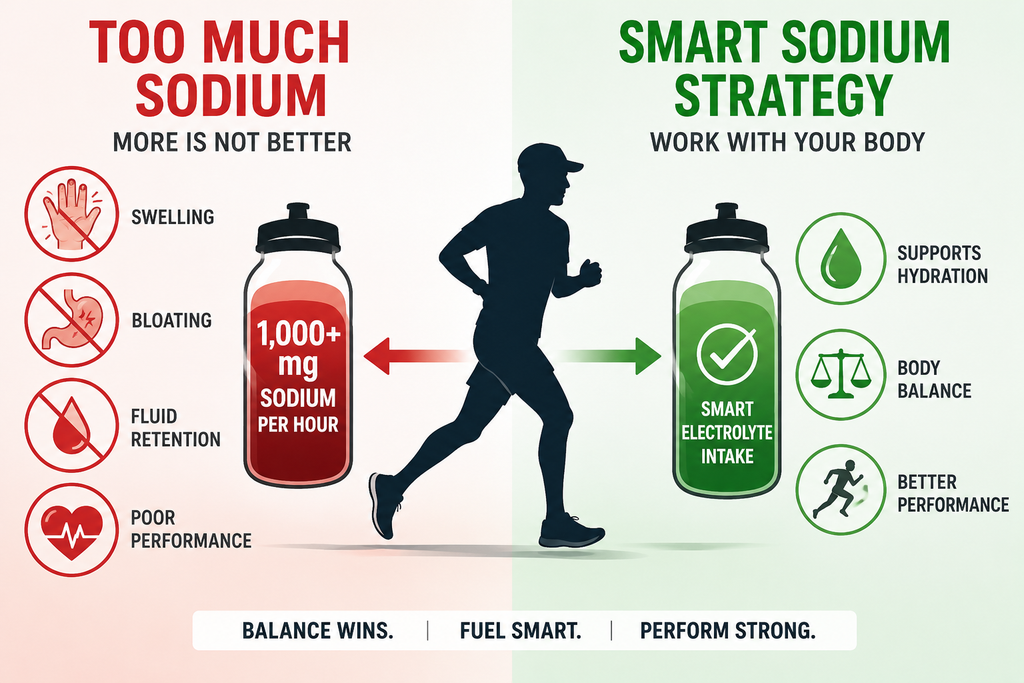
DO YOU REALLY NEED 1,000 MG OF SODIUM PER HOUR?
Do You Really Need 1,000 mg of Sodium Per Hour?
Many endurance athletes are now doing sweat tests to find out how much fluid and sodium they lose during training and racing. Sometimes the results suggest very high sodium needs, such as 1,000 mg of sodium per hour or more.
At first glance, that sounds simple: if the test says you lose 1,000 mg of sodium per hour, surely you should replace 1,000 mg per hour.
At Hammer Nutrition, we do not believe it works that way.
Sweat testing can provide some interesting information, but it only shows a small part of the picture. The human body is not a leaking bucket that loses the same amount of fluid and sodium every hour. It is a highly regulated system, and during prolonged exercise, your body adjusts how it manages fluid and electrolytes.
That is why relying too heavily on sweat test numbers can lead athletes to take in far too much sodium.
What Does a Sweat Test Actually Measure?
A sweat test usually takes place in a controlled environment. The athlete runs on a treadmill or rides a bike while their sweat is collected and analysed. The test then estimates how much fluid and sodium they lose during that session.
The issue is that most sweat tests are short. They may last around an hour.
That can give a reasonable idea of what happens during that first hour. But it does not accurately show what will happen in the second, third, fourth, or fifth hour of exercise.
This matters because the body does not behave in exactly the same way hour after hour.
At the start of exercise, especially in the first 30 to 60 minutes, it is common to lose a larger amount of fluid and electrolytes. Sodium chloride, commonly known as salt, is one of the main minerals lost in sweat.
But that early loss does not mean your body will continue losing sodium at the same rate for the rest of the workout or race.

Why Sodium Loss Does Not Stay the Same Every Hour
The body already contains a large amount of sodium before exercise begins. Sodium is essential for normal body function, nerve signalling, muscle contraction, and fluid balance.
When exercise starts, the body may lose a noticeable amount of sodium through sweat. However, it also has built-in mechanisms to help control and conserve sodium.
One of the most important hormones involved is aldosterone.
In simple terms, aldosterone helps monitor sodium levels in the body. When the body senses that sodium losses are becoming too high, aldosterone helps the kidneys conserve sodium and recirculate it back into the system.
This is one of the reasons why we do not recommend trying to replace every milligram of sodium shown on a sweat test.
The body is already working to manage the situation.
That does not mean you need no electrolytes during exercise. You do. But it does mean you should not assume that a sweat test number must be replaced exactly, hour after hour.
Why 1,000 mg of Sodium Per Hour Can Be Too Much
Many athletes see sweat test results showing a loss of 1,000 mg or even 2,000 mg of sodium per hour. That sounds alarming.
But it is important to understand the difference between sodium and salt.
1,000 to 2,000 mg of sodium equals roughly 2.5 to 5 grams of salt.
That is a lot of salt.
The mistake many athletes make is assuming they must consume that amount every hour during training or racing. In many cases, this is far too much.
When you take in too much sodium from salt tablets, high-sodium drinks, salty foods, or sodium loading before exercise, your body responds. Once the body detects an excessive intake of sodium, aldosterone may reduce its normal sodium-conserving activity.
Instead of helping you retain sodium efficiently, the body may begin excreting more sodium.
That means taking in more sodium does not always equal better sodium status. In fact, it can create the opposite result.
More is not always better. In endurance nutrition, more is often where the wheels start coming off.
The Problem With Too Much Sodium
Excess sodium can cause several problems during training and racing.
One of the most common signs is fluid retention. This can appear as swelling in the hands, wrists, feet, ankles, face, or under the eyes.
If you have ever finished a long workout or race with swollen fingers, tight shoes, puffy cheeks, or noticeable salt stains on your clothing, your sodium intake may have been too high.
Too much sodium can also contribute to:
- stomach discomfort
- bloating
- elevated blood pressure
- excessive thirst
- increased sodium excretion
- fluid retention
- reduced performance
Another hormone involved here is vasopressin, which helps the body control water balance. When sodium intake is too high and the normal balance is disrupted, vasopressin may contribute to uncomfortable fluid retention.
This is one reason athletes can feel heavy, swollen, and sluggish when they overdo sodium
Do Endurance Athletes Still Need Electrolytes?
Yes, endurance athletes still need electrolytes.
The point is not to avoid sodium completely. The point is to avoid excessive sodium intake based on a single sweat test result.
Electrolyte supplementation should support the body’s natural regulation systems, not overwhelm them.
Hammer Nutrition’s approach is based on replacing what the body can reasonably use, rather than trying to replace every loss in exact amounts. This helps support performance without causing the common problems linked to overconsumption.
Just as too many calories can cause stomach issues, too much fluid can cause problems, and too much sodium can disrupt the body’s natural balance.
The goal is not maximum intake.
The goal is the right intake.
Why “Replace What You Lose” Is Too Simple
The phrase “replace what you lose” sounds logical, but during endurance exercise it is too simplistic.
If a sweat test says you lose a certain amount of sodium in one hour, that does not mean you should consume the same amount every hour of a long event.
The body changes its response as exercise continues. Hormones such as aldosterone help conserve sodium. Fluid intake, temperature, intensity, fitness, acclimatisation, and race duration all affect what your body needs.
Trying to match sweat test losses exactly can lead to over-supplementing, especially in longer races.
That is where problems begin.
Signs You May Be Taking Too Much Sodium
You may be overdoing sodium if you regularly notice:
- swollen hands or fingers
- swollen ankles or feet
- puffiness around the eyes or cheeks
- clothing covered in heavy salt stains
- bloating or stomach discomfort
- unusual thirst despite drinking
- feeling heavy or sluggish late in a race
These signs do not always mean sodium is the only issue, but they are strong indicators that your intake may need reviewing.
Bottom Line
Sweat tests can be interesting, but they do not tell the full story.
They may show what happens during a short, controlled session, but they do not accurately represent what happens during long-duration endurance exercise. Your body has built-in systems that help regulate sodium and fluid balance, especially through hormones such as aldosterone.
Trying to replace sodium loss exactly, hour after hour, can lead to excessive sodium intake. This may cause swelling, bloating, high fluid retention, increased sodium excretion, stomach issues, elevated blood pressure, and poor race performance.
At Hammer Nutrition, our position is simple:
Do not blindly follow a sweat test number. Use electrolytes wisely, support the body’s natural regulation systems, and avoid the mistake of thinking more sodium automatically means better performance.
In endurance nutrition, balance wins. Too much sodium can hurt performance just as surely as too little.
Old-school common sense still applies: give the body what it needs, not everything a spreadsheet tells you it lost.